Table of Contents
ToggleModular tiny homes have gone from niche curiosity to mainstream solution for affordable, downsized living. Unlike site-built structures or RVs on chassis, modular tiny homes arrive in prefabricated sections, ready to assemble on-site. They’re faster to build, often cheaper, and offer the factory-quality control you won’t get from a ground-up build. If you’re weighing the jump to tiny living but don’t want the headache of stick-framing a shell yourself, a modular approach might be the smartest shortcut. This guide walks through what modular tiny homes are, why they make financial sense, how to buy and install one, and the zoning hurdles you’ll need to clear before a single module hits your lot.
Key Takeaways
- Modular tiny homes are prefabricated dwellings built in factory-controlled sections and assembled on-site, offering faster construction timelines (6–10 weeks) and tighter quality control than site-built alternatives.
- Modular tiny homes typically cost $150–$250 per square foot ($50,000–$150,000 total), significantly less than custom site-built tiny homes, and qualify for traditional mortgages, FHA loans, and VA loans unlike RVs.
- Zoning restrictions are the biggest obstacle: many jurisdictions mandate minimum square footages of 600–1,000 sq ft for primary dwellings, though accessory dwelling unit (ADU) ordinances may provide a workaround in some states.
- Popular modular designs range from single-module studios (200–400 sq ft) to two-module layouts with separate bedrooms, and feature engineered lumber, mini-split HVAC systems, spray-foam insulation, and luxury vinyl plank flooring.
- Before purchase, verify permits, foundation requirements ($5,000–$15,000), utility hookups ($2,000–$10,000), and delivery costs ($3,000–$8,000), plus ensure your site has adequate access for crane trucks (14-foot clearance, 50-foot turnaround).
- DIY customization such as vertical shelving, accent walls, under-stair storage, and LED lighting can maximize space and personalize modular tiny homes without compromising structural integrity.
What Are Modular Tiny Homes?
A modular tiny home is a dwelling built in climate-controlled factory sections (modules) that are then transported to a permanent foundation and assembled. These aren’t mobile homes or RVs: they’re engineered to meet the same building codes as site-built houses, typically the International Residential Code (IRC) or state-specific variations.
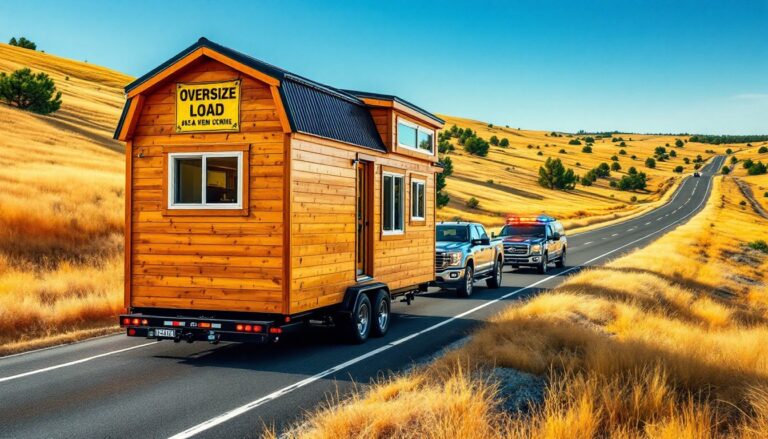
Each module is usually 8 to 12 feet wide and up to 40 feet long, designed to ship on flatbed trucks. Once on-site, a crane lifts and positions them onto a crawl space, slab, or pier foundation. The seams between modules are sealed, utilities are connected, and finish work (trim, paint touch-ups) completes the assembly.
Modular tiny homes differ from manufactured homes, which are built to HUD code and sit on a permanent steel chassis. They also differ from “tiny houses on wheels” (THOWs), which are classified as RVs and follow entirely different regulations. Modular units are real property once affixed to land, which means they can appreciate, qualify for traditional mortgages, and typically face fewer zoning restrictions than THOWs.
Most modular tiny homes range from 200 to 600 square feet. They can be single-module studios or multi-module layouts with separate sleeping lofts, full baths, and covered porches. Because the structure is built indoors, weather delays don’t exist, and quality control is tighter than what you’d see with a crew framing in the rain.
Why Choose a Modular Tiny Home Over Traditional Construction?
Modular construction shaves weeks off timelines. A site-built tiny home can take four to six months from foundation pour to final inspection: modular homes often arrive ready for occupancy in six to ten weeks after order.
Factory construction means controlled environments. Framing lumber isn’t exposed to moisture, insulation is installed to spec, and electrical rough-ins are inspected before walls close up. You won’t deal with warped studs or mold from rain-soaked sheathing.
Labor costs drop, too. Factory workers are salaried, not hourly contractors juggling three jobs. Material waste is minimized because factories order in bulk and reuse cutoffs across multiple builds. That efficiency translates to lower per-square-foot pricing.
Modular homes also sidestep some of the headaches of coordinating subcontractors. Your HVAC, plumbing, and electrical systems are roughed in under one roof, inspected by factory QA, and delivered as a turnkey package. You’re not waiting on a plumber who’s two weeks behind or an electrician who ghosted after the rough-in.
Cost Savings and Budget Flexibility
As of 2026, modular tiny homes typically cost $50,000 to $150,000 depending on square footage, finishes, and customization. That breaks down to roughly $150 to $250 per square foot, compared to $200 to $350 per square foot for custom site-built tiny homes in many markets.
You’ll still pay for:
- Foundation and site prep: Pier-and-beam or slab foundations run $5,000 to $15,000, depending on soil conditions and frost depth.
- Delivery and crane set: Expect $3,000 to $8,000 for transport and module placement, more if your lot is remote or access is tight.
- Utility hookups: Water, sewer (or septic), and electric service connections can add $2,000 to $10,000.
- Permits and inspections: Budget $500 to $2,500, varying by jurisdiction.
Because modular homes are classified as real property, they qualify for conventional mortgages, FHA loans, and VA loans. That’s a huge advantage over THOWs, which usually require RV loans with higher interest rates and shorter terms. Some modular manufacturers partner with lenders who understand the product and can expedite underwriting.
Popular Modular Tiny Home Designs and Floor Plans
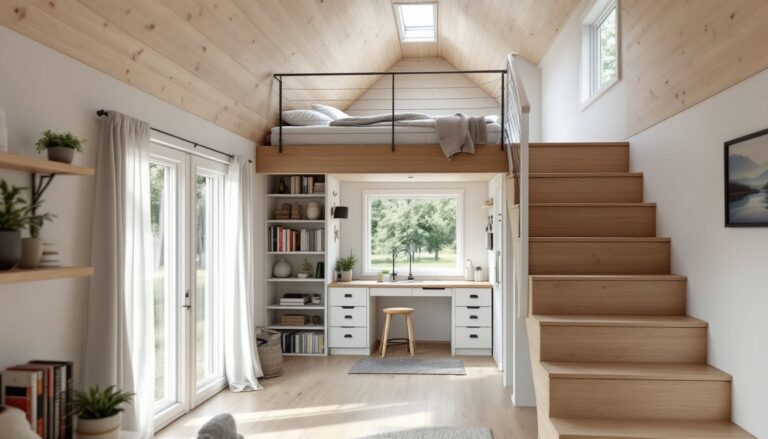
Single-module layouts (200–400 sq ft) are the most common entry point. Expect an open-plan living/kitchen, a full bath with 32×32-inch or 36×36-inch shower pan, and a sleeping loft accessed by ladder or ship’s stairs. Some builders offer ground-floor Murphy beds or convertible sofas to avoid loft climbing.
Two-module designs (400–600 sq ft) add a separate bedroom, larger kitchen with full-size appliances, and sometimes a second bath or laundry closet. The seam between modules is hidden under flooring and drywall: if done right, you won’t notice it.
Popular features in 2026 models include:
- Engineered lumber (LVL beams, I-joists): Stronger, lighter, and more stable than dimensional lumber.
- Mini-split HVAC systems: Ductless heat pumps that handle heating and cooling in one wall-mounted unit, typically 9,000–12,000 BTU.
- Spray-foam insulation: R-21 to R-30 in walls, R-38 to R-49 in roofs, for tight thermal envelopes.
- Luxury vinyl plank (LVP) flooring: Water-resistant, durable, and easier to install than hardwood.
- Composting or ultra-low-flush toilets: Common in off-grid or low-water setups.
Some manufacturers let you choose finishes, countertops (laminate, butcher block, quartz), cabinetry (stock, semi-custom), and exterior siding (vinyl, fiber cement, corrugated metal). Others offer a few fixed packages to keep costs predictable.
If you’re planning to live off-grid, look for models pre-wired for solar with a dedicated inverter/battery cabinet and roughed-in greywater plumbing. Not all builders offer this, so ask upfront.
How to Buy and Install a Modular Tiny Home
Start by vetting manufacturers. Look for builders who are members of the Modular Building Institute (MBI) or have third-party certification from ICC-ES or a state modular program. Request references and visit completed installations if possible.
Order timelines vary. Custom builds take eight to twelve weeks from deposit to delivery: stock floor plans can ship in four to six weeks. You’ll sign a purchase agreement that details:
- Base price and included features
- Delivery radius (many builders cap free delivery at 100–300 miles)
- Warranty terms (structure, systems, appliances)
- Payment schedule (typically 10% deposit, progress payments, and final payment on delivery)
While the modules are being built, prep your site:
- Survey and stake the foundation footprint. Modular homes require level, square foundations: tolerance is usually ±1/4 inch over the length of the module.
- Pour or build the foundation. Pier-and-beam is common for tight budgets and sloped lots: slab-on-grade works for flat sites and offers built-in floor insulation.
- Run utility stubs. Position water, sewer, and electrical service entries to match the module’s floor plan. Your builder will provide a utility hookup diagram.
- Clear access. Crane trucks and module trailers need 14-foot overhead clearance and a turnaround radius of at least 50 feet.
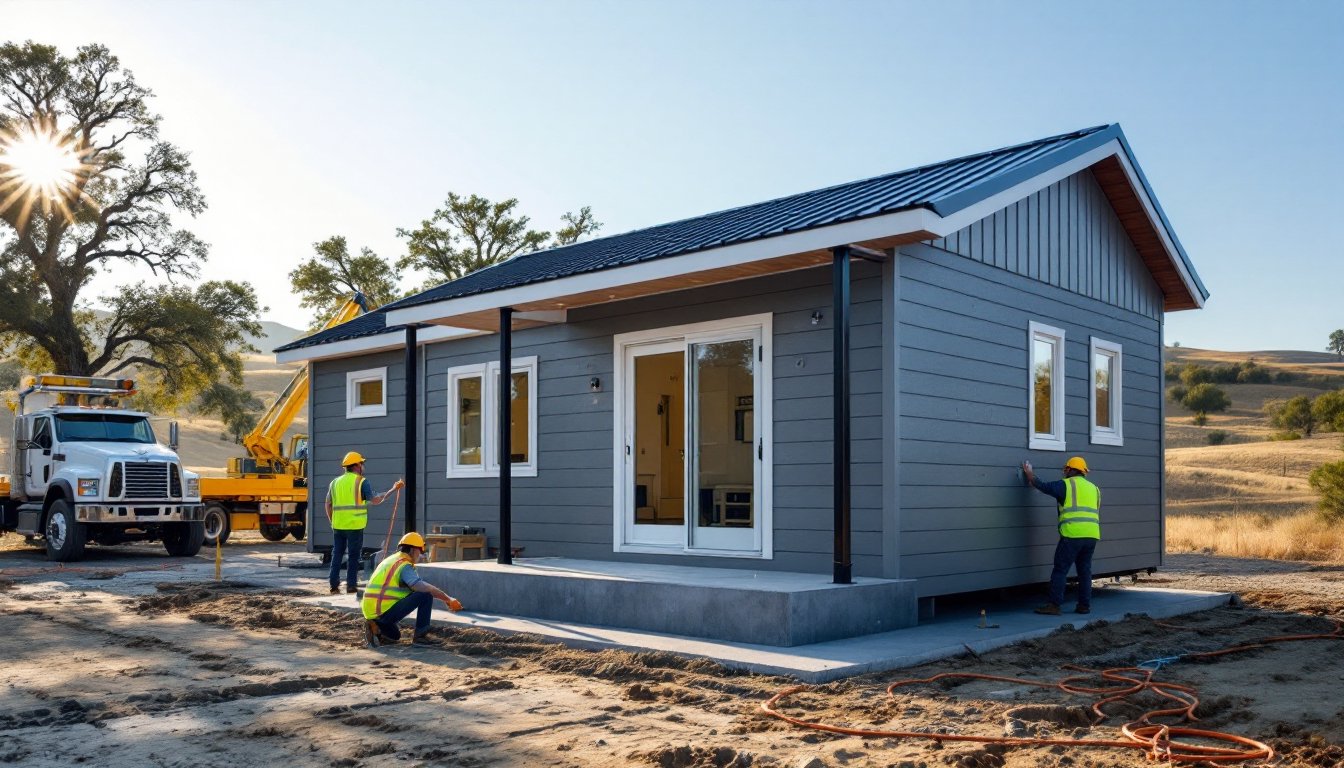
On delivery day, the crane sets each module in sequence. The crew bolts them to the foundation, seals the marriage line (the seam between modules), and connects utilities. Finish work, installing trim, caulking seams, hooking up appliances, takes one to three days.
Final inspection happens after finish work. The local building department will check structural attachment, electrical, plumbing, and HVAC. Once you pass, you get your certificate of occupancy.
Zoning, Permits, and Legal Considerations
Zoning is the biggest wildcard. Modular tiny homes are treated as site-built structures, so they must meet minimum square footage requirements set by local ordinances. Many jurisdictions mandate at least 600–1,000 sq ft for a primary dwelling, effectively banning sub-600-sq-ft modular tiny homes unless you zone them as accessory dwelling units (ADUs).
ADU ordinances vary widely. Some cities allow one ADU per lot with no minimum size, while others cap ADU square footage at 50% of the primary dwelling or 800 sq ft, whichever is less. States like California, Oregon, and Washington have preemptive ADU laws that override restrictive local codes, but enforcement is inconsistent.
Permits are required in nearly all jurisdictions. Expect to submit:
- Engineered foundation plans stamped by a licensed PE
- Module engineering and energy compliance from the manufacturer (usually factory-certified)
- Site plan showing setbacks, easements, and utility routes
- Septic or sewer approval if you’re not on municipal service
Permit fees range from $500 to $2,500. Plan review can take two to eight weeks: expedited review costs extra in some counties.
HOA covenants can also block modular tiny homes. Read your CC&Rs carefully: some restrict “prefabricated” or “factory-built” homes, or mandate minimum square footage above what zoning requires. If you’re buying land, verify zoning and covenants before you sign.
For off-grid setups, you may need additional permits for wells, septic systems, and solar arrays. Septic permits alone can take four to twelve weeks and cost $1,000 to $5,000 depending on soil testing and system size.
DIY Customization and Interior Design Tips
Most modular tiny homes arrive with basic finishes, leaving room for sweat equity. Common DIY upgrades include:
- Custom shelving: Use 3/4-inch plywood or MDF and adjustable shelf standards to maximize vertical storage. In a tiny home, every wall is fair game.
- Accent walls: Shiplap, reclaimed wood, or peel-and-stick wallpaper add texture without eating square footage. Keep colors light to avoid shrinking the space visually.
- Under-stair storage: If you have ship’s stairs to a loft, build pull-out drawers or cubbies under each tread. Cut 1×12 pine or poplar to fit, add drawer slides rated for 100 lbs, and finish with semi-gloss paint.
- Fold-down furniture: Wall-mounted desks and tables save floor space. Use piano hinges and folding leg brackets: make sure you hit studs or use toggle bolts rated for the load.
Paint is the fastest, cheapest transformation. Light neutrals (whites, grays, soft beiges) reflect light and make tight quarters feel larger. Save bold colors for accents, cabinet interiors, a single feature wall, or removable decor.
Lighting matters more in small spaces. Swap builder-grade fixtures for LED recessed cans (4-inch or 6-inch) or track lighting to free up visual space. Add under-cabinet LED strips in the kitchen for task lighting: they draw minimal power and don’t generate heat.
For small space living ideas that translate well to tiny modular homes, multi-functional furniture and smart storage are key. Many tiny homeowners also turn to beginner woodworking projects to build custom storage benches, floating shelves, and fold-down tables tailored to their exact dimensions. If clutter control becomes an issue, proven decluttering guides can help maintain order in tight quarters.
Safety note: If you’re cutting into walls or ceilings to add lighting or vents, verify you’re not hitting structural members, wiring, or plumbing. Modular homes often have engineered trusses or I-joists that can’t be notched without compromising strength. When in doubt, consult the builder’s framing plans or hire an electrician.
Window treatments should maximize light while offering privacy. Cellular shades provide insulation and blackout when needed: they mount inside the window frame to save wall space. Avoid heavy drapes that visually chop up small rooms.