Table of Contents
ToggleMoving a tiny home isn’t like hiring a moving truck for your couch and boxes. These structures, often 8.5 feet wide, up to 13.5 feet tall, and weighing 10,000 pounds or more, require specialized equipment, permits, route planning, and a solid understanding of state DOT regulations. Whether relocating a tiny house on wheels (THOW) across state lines or moving it to a new parcel down the road, proper transport protects both the structure and everyone on the highway. This guide covers what tiny home owners need to know before the wheels start rolling.
Key Takeaways
- Tiny home transport requires specialized permits, route planning, and compliance with DOT regulations because these structures exceed standard vehicle width and height limits in most states.
- Proper weight verification at a truck scale is critical—overloading a tiny home can cause tire blowouts, brake failure, and trailer sway, making professional weighing non-negotiable before any move.
- Tiny home transport costs range from $1.50–$3.00 per mile for shorter moves and $1.00–$2.00 per mile for cross-country hauls, plus additional expenses for permits, escorts, and fuel.
- Choosing between DIY towing, professional movers, or hotshot services depends on distance, tow vehicle capacity, and experience—DIY is only recommended for short moves under 500 miles by experienced towers.
- Pre-transport preparation including securing interior items, inspecting tires and brakes, checking roof penetrations, and testing trailer lights prevents structural damage and roadside emergencies during the move.
What Is Tiny Home Transport and Why Does It Matter?
Tiny home transport is the process of moving a tiny house, typically built on a trailer chassis, from one location to another using a towing vehicle or professional transport service. Unlike RVs or campers, most tiny homes aren’t designed for frequent towing. They’re built using residential construction methods: stick framing, metal roofing, standard windows, and sometimes masonry or tile, which makes them heavier and more fragile during transport.
Why it matters: improper transport can crack drywall, shatter windows, stress roof trusses, or even cause structural failure of the trailer frame. Tiny homes also exceed standard vehicle width and height limits in most states, triggering oversize load regulations. Ignoring these rules can result in fines, impoundment, or accidents. Even a single move requires careful prep and compliance with Department of Transportation (DOT) standards.
Most owners transport their tiny home only once or twice, during initial delivery and perhaps one relocation. Each move is a significant event that demands planning, not a casual weekend project.
Key Factors to Consider Before Transporting Your Tiny Home
Size, Weight, and Trailer Specifications
Dimensions dictate everything. Standard tiny homes sit on trailers ranging from 20 to 28 feet long and 8.5 feet wide (the maximum width for non-permitted towing in most states). Heights vary from 10.5 to 13.5 feet, including the trailer deck. Anything over 8.5 feet wide or 13.5 feet tall typically requires an oversize permit and may need pilot cars or specific travel hours.
Weight is critical. A bare trailer weighs 2,000–3,000 pounds. Add framing, roofing, siding, appliances, cabinets, and furnishings, and total weight often hits 8,000 to 12,000 pounds. The trailer’s Gross Vehicle Weight Rating (GVWR) must exceed the total loaded weight. Check the trailer certification plate and confirm axle ratings, dual 7,000-pound axles are common for tiny homes, supporting up to 14,000 pounds GVWR.
Hitch type matters. Most tiny home trailers use a gooseneck or fifth-wheel hitch, mounted in the bed of a heavy-duty pickup (typically 3/4-ton or 1-ton), for better weight distribution and stability. Bumper-pull hitches work for smaller builds under 10,000 pounds but reduce maneuverability.
Before moving, weigh the loaded tiny home at a truck scale. Don’t guess. Overloading causes tire blowouts, brake failure, and trailer sway.
Permits, Regulations, and Route Planning
Every state enforces width, height, and weight limits. Standard limits are usually 8.5 feet wide, 13.5–14 feet tall, and 10,000–12,000 pounds without a permit. Exceed any dimension, and an oversize load permit is required. Permit requirements vary by state, some allow self-issue online permits: others require commercial carriers or third-party services.
Route planning is non-negotiable. Many tiny home transport routes involve careful attention to low bridges, narrow roads, weight-restricted bridges, and construction zones. Use DOT oversize route maps or work with a permit service to identify legal routes. Some highways ban oversize loads during peak hours or weekends.
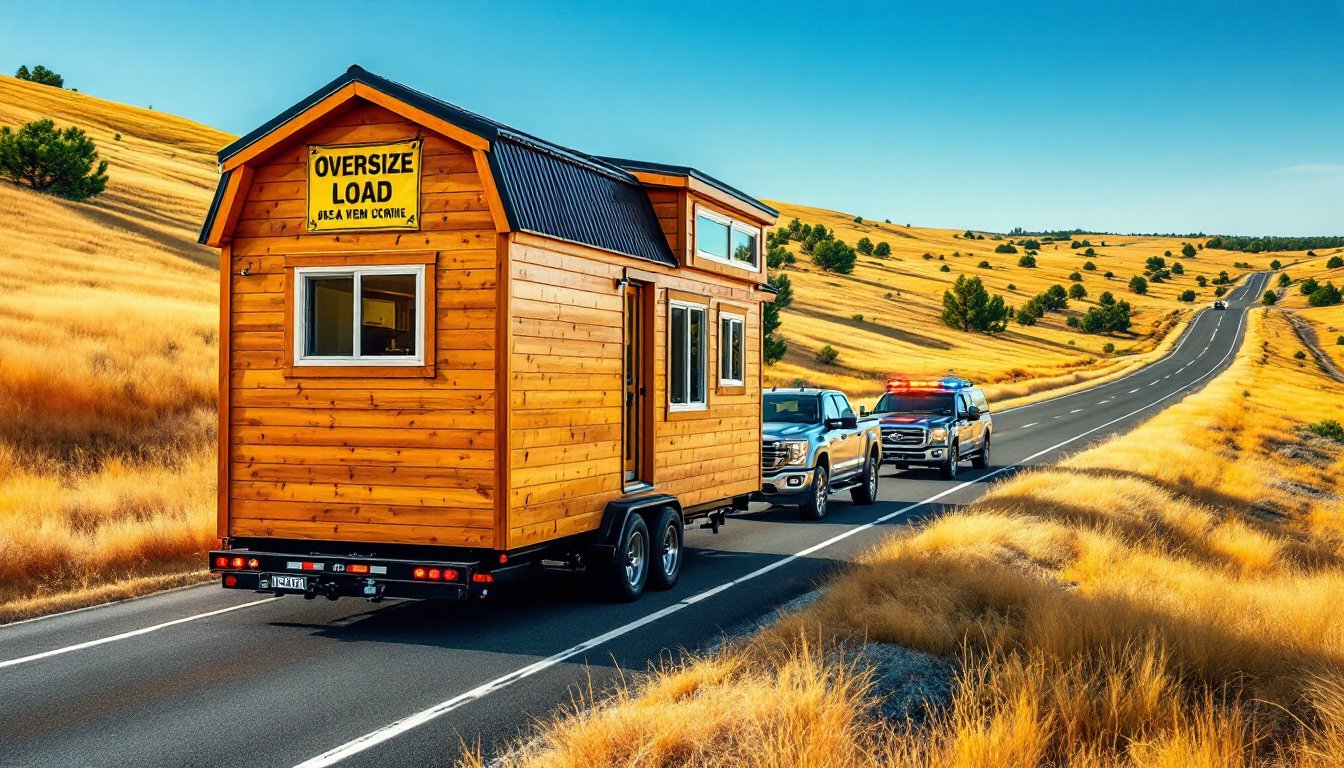
Factor in escort vehicle requirements. Loads over 10 feet wide often need a rear pilot car with an “OVERSIZE LOAD” sign and flashing amber lights. Loads over 12 feet wide may require front and rear escorts. In some states, any height over 14 feet triggers additional restrictions.
Power line and tree clearance is another issue. Measure total height from ground to roof peak and confirm clearance on your route, especially on rural roads or in areas with overhead utilities.
How to Choose the Right Tiny Home Transport Method
There are three main options: DIY towing, hiring a professional tiny home transport company, or using a hotshot or RV transport service.
DIY towing works if the owner has a properly rated tow vehicle (3/4-ton or 1-ton diesel truck), experience towing heavy trailers, and the time to secure permits and plan routes. This is the cheapest option but demands confidence with backing up, highway merging, brake controller setup, and emergency repairs. Not recommended for moves over 500 miles or for first-time towers.
Professional tiny home movers specialize in THOW transport. They handle permits, route planning, insurance, and have equipment rated for heavy loads. Costs run higher, but the service includes liability coverage and experienced drivers. This is the best choice for long-distance moves, complex routes, or high-value custom builds.
Hotshot or RV transport services are a middle option. These carriers move RVs, trailers, and tiny homes commercially. They’re typically cheaper than dedicated tiny home movers but may have less experience with residential-style construction and securing custom-built homes. Verify their insurance covers tiny homes specifically, not just RVs.
For compact builds and small space living, weight and dimensions may fall within standard towing limits, simplifying the choice. Larger or architecturally complex homes, those with stone veneer, metal roofs, or cantilevered sections, often need professional handling.
Cost Breakdown: What You’ll Pay to Move a Tiny House
Tiny home transport costs vary by distance, size, route complexity, and service level. Budget for these line items:
- Professional transport service: $1.50 to $3.00 per mile for moves under 500 miles: $1.00 to $2.00 per mile for longer hauls. A 300-mile move might cost $450–$900: a cross-country move (2,500 miles) could run $2,500–$5,000.
- Oversize load permits: $15 to $100 per state, depending on dimensions and weight. Multi-state trips stack up, crossing five states could add $200–$500 in permit fees.
- Escort vehicles: $1.50 to $2.50 per mile per escort. A 400-mile move requiring one pilot car adds $600–$1,000.
- Insurance: Many movers include liability in their quote. DIY towers need to confirm their auto policy covers towing a tiny home. Supplemental policies for structures in transit run $200–$500 for short-term coverage.
- Tow vehicle rental (if needed): Heavy-duty truck rentals cost $150–$250 per day plus mileage. Not all rental companies allow towing over 10,000 pounds, read the fine print.
- Fuel: Expect 6–10 mpg when towing a tiny home. A 1,000-mile trip at 8 mpg and $3.50/gallon diesel costs roughly $440 in fuel alone.
DIY moves save on labor but still incur permits, fuel, insurance, and potential truck rental. Total DIY cost for a 500-mile move might be $800–$1,200. Professional service for the same move: $1,500–$2,500.
Pricing fluctuates with fuel costs, permit changes, and regional labor rates. Always get written quotes and confirm what’s included.
Preparing Your Tiny Home for Safe Transport
Prep work prevents damage. Start inside:
- Remove or secure all loose items. Pack dishes, decor, and small furniture. Even items in cabinets can shift and break.
- Lock or brace cabinet doors and drawers. Use bungee cords, childproof latches, or painter’s tape.
- Disconnect and secure appliances. Unplug everything. Tape refrigerator and oven doors shut. Remove or secure the refrigerator if it’s freestanding.
- Check windows and doors. Close and latch all windows. Confirm door latches hold securely, add a strap or bungee if needed.
- Inspect the loft. Remove heavy items from sleeping lofts to lower the center of gravity and reduce stress on the structure.
Exterior and trailer checks:
- Inspect trailer tires, lug nuts, and bearings. Tires should be rated for the load and properly inflated (usually 50–60 psi for trailer tires). Check for sidewall cracks or tread wear. Re-torque lug nuts to spec (typically 90–120 ft-lbs).
- Test trailer brakes and lights. Confirm brake controller is installed and calibrated. Check all running lights, brake lights, and turn signals.
- Secure roof penetrations and trim. Check that roof vents, skylights, chimney caps, and metal flashing are fastened. High winds during towing can rip off loose components.
- Check siding and trim. Tighten any loose siding, battens, or trim boards. Vibration will worsen minor issues.
- Inspect the hitch and safety chains. Confirm the coupler latches securely, safety chains are crossed and rated for the load, and the breakaway brake cable is connected.
Weatherproofing: Tape over roof vents, exhaust vents, and any gaps where rain or road spray might enter. Driving through rain at highway speed can force water into places it wouldn’t normally reach.
PPE during prep: Wear gloves when handling metal trailer components, especially when checking modern tiny home builds with sharp edges or exposed fasteners. Safety glasses protect against debris when inspecting undercarriage components.
Finally, do a walk-around inspection before departure and at every fuel stop. Tiny homes experience more vibration and stress during transport than in stationary use, catching a problem early prevents roadside disasters.