Table of Contents
ToggleTiny homes have exploded in popularity, but the real challenge isn’t going small, it’s staying functional while doing it. That’s where loft designs come in. By stacking sleeping or storage areas overhead, builders reclaim precious floor space for kitchens, bathrooms, and living zones that actually work. Whether someone’s planning a DIY build or adapting a pre-fab design, understanding loft layouts separates cramped quarters from genuinely livable micro-dwellings. This guide breaks down proven loft configurations, structural requirements, and design trade-offs so builders can make informed choices before the first stud goes up.
Key Takeaways
- Loft designs in tiny home plans maximize usable floor space by elevating sleeping areas to overhead zones with 3.5–4.5 feet of clearance, freeing ground level for kitchens, bathrooms, and living areas.
- Proper loft framing requires 2×6 or 2×8 joists spaced 16 inches on center to safely support 40–50 pounds per square foot live load, ensuring structural integrity for a queen mattress and occupants.
- Single loft layouts work best for individuals or couples, while double loft configurations suit families or those needing guest space, each with distinct design trade-offs around headroom and weight distribution.
- Headroom miscalculations are common—sitting upright in bed requires closer to 4 feet of clearance, making a 12/12 or steeper roof pitch essential for comfort and usability.
- Ventilation and climate control are critical in loft spaces since heat rises; install operable vents, skylights, or transom windows to prevent summer overheating and winter temperature imbalances.
- Before building, confirm local code requirements for egress windows (5.7 square feet minimum opening), guardrails (36–42 inches height), and whether tiny homes are classified as RVs or require IRC Appendix Q compliance.
Why Loft Designs Are Essential for Tiny Homes
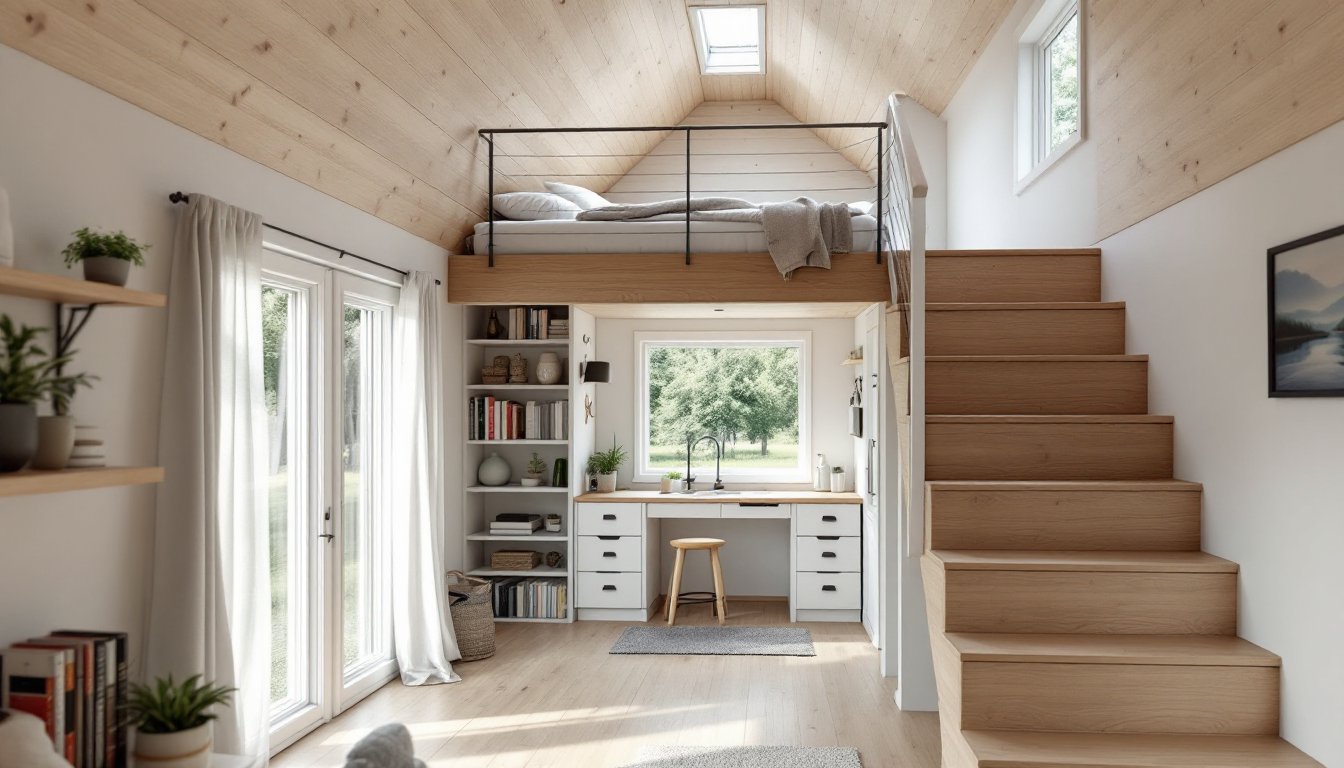
Vertical space is the only direction tiny homes have room to grow. Most tiny houses range from 120 to 400 square feet, and dedicating 60–80 square feet to a ground-level bedroom consumes a quarter of that footprint. Lofts solve this by elevating sleeping quarters to areas with limited headroom, typically 3.5 to 4.5 feet of clearance, which works fine for a mattress but would feel oppressive for daytime activities.
From a structural standpoint, lofts distribute weight efficiently. A properly framed loft floor uses 2×6 or 2×8 joists spaced 16 inches on center, creating a platform strong enough for a queen-size mattress, bedding, and two adults (plan for 40–50 pounds per square foot live load). This isn’t cosmetic, it’s a load-bearing platform that ties into wall studs and roof framing.
Lofts also create natural zoning. The area beneath becomes a multifunctional zone: closet storage, a home office nook, or even a compact bathroom. This stacking approach means every cubic foot earns its keep, which is non-negotiable in spaces where a poorly placed cabinet can block a doorway.
Safety codes matter here. Many jurisdictions classify tiny homes on wheels as RVs, sidestepping residential codes, but stationary tiny homes may need to meet International Residential Code (IRC) Appendix Q standards, which address ceiling heights, egress windows, and loft access. Builders should confirm local requirements before framing.
Popular Tiny Home Floor Plans Featuring Lofts
Single Loft Layout for Solo Living
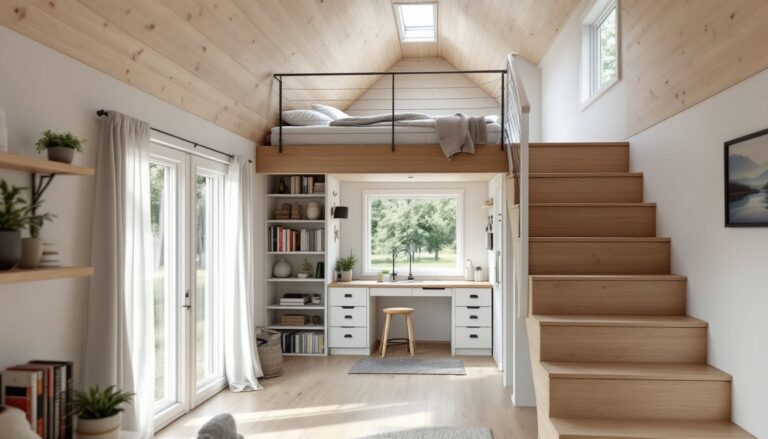
The single loft design is the workhorse of tiny home plans. It positions one sleeping loft at the gable end, typically above a bathroom or kitchen. Floor space below stays open for a living area, dining table, or workspace. This layout works well for individuals or couples who don’t need guest accommodations.
Typical dimensions for a single loft run 6 to 8 feet wide by 8 to 10 feet deep, enough for a full or queen mattress with minimal side clearance. Access is usually via a ladder (steep but space-efficient) or alternating tread stairs (easier to climb, but they consume 3–4 square feet of floor space). Storage drawers built into stair risers add function without sacrificing the footprint.
Platform height sits around 6 to 6.5 feet off the main floor, leaving adequate headroom below for standing. Ceiling pitch determines loft usability, 12/12 or steeper roof pitches provide more vertical space, while shallow pitches like 8/12 force lower platforms or reduce loft depth.
Many builders integrate built-in storage along the loft perimeter: cubbies for books, charging stations, or low-profile shelving. Guardrails are non-negotiable for safety: 36-inch minimum height is standard, with pickets or cable rails spaced to prevent falls.
Double Loft Plans for Families or Guests
Double loft configurations place sleeping areas at both gable ends, freeing the center for living, cooking, and dining. This setup suits small families, couples who want separated office space, or anyone hosting occasional guests. One loft serves as the primary bedroom, the other as a kids’ room, office, or flex space.
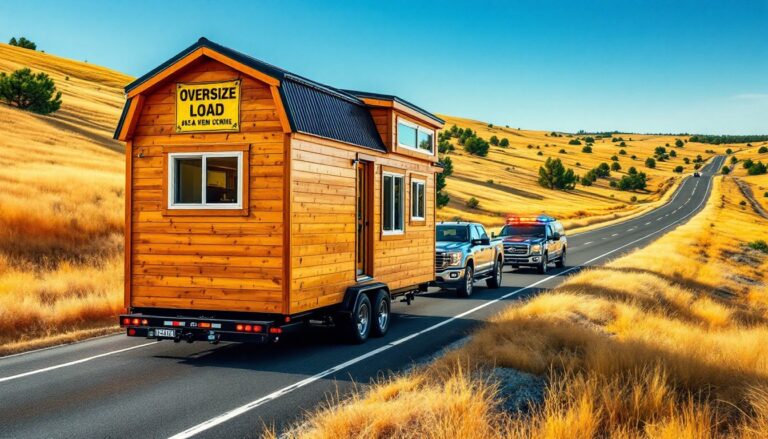
Each loft mirrors the single-loft dimensions, 6×8 or 7×10 feet, but headroom becomes trickier. With two lofts, the main floor area between them often has a flat ceiling around 7 to 8 feet high, meeting code minimums while keeping exterior height within 13.5-foot road-legal limits for trailers.
Double loft plans demand careful weight distribution. Two sleeping platforms, each carrying 300–400 pounds, require robust framing, usually 2×8 joists or engineered lumber like LVL (laminated veneer lumber) to prevent floor sag. Anchoring joists into wall studs with joist hangers or hurricane ties keeps everything locked down during road travel if the home is mobile.
A popular variant features loft storage and shelving that doubles as dividers between zones. This approach borrows from small space living ideas where every piece of furniture serves multiple roles. Stairs to each loft can flank the main entrance or run along opposite walls, placement depends on door swing, window locations, and appliance positioning.
Key Design Considerations for Loft Spaces
Headroom is the most common miscalculation. Builders often assume 3.5 feet of loft clearance is enough, but sitting upright in bed requires closer to 4 feet, especially for taller individuals. A 12/12 or 14/12 roof pitch provides this, but it raises the overall structure height, potentially exceeding trailer limits or local height restrictions for permanent foundations.
Ventilation and climate control get tricky. Heat rises, so lofts become sweltering in summer without airflow. Install operable gable vents, skylights, or transom windows to create cross-ventilation. A small ceiling fan helps, but it needs a low-profile model (under 10 inches from ceiling to blade) to avoid head strikes. In winter, heat pooling in the loft can leave the main floor cold, balance this with a mini-split HVAC system or strategically placed return vents.
Access method affects daily livability. Ladders save space but aren’t practical for anyone with mobility limits or for carrying laundry up to bed. Alternating tread stairs feel safer but consume 18 to 24 inches of width plus landing space. Some builders compromise with a hybrid: a steep ship’s ladder with handrails, angled at 60–70 degrees instead of vertical.
Guardrails and fall protection aren’t optional. Code or not, a 6-foot fall onto a hardwood floor causes serious injury. Use solid half-walls, cable rails, or vertical pickets with gaps no wider than 4 inches to prevent kids or pets from slipping through. Railing height should hit 36 to 42 inches above the loft floor.
Egress is a life-safety issue. If the loft serves as a sleeping area, IRC requires an emergency escape window with a minimum opening of 5.7 square feet and a sill height no more than 44 inches above the loft floor. This applies to stationary tiny homes: RV-classified builds have different rules. Either way, a second exit route is smart planning.
DIY vs. Pre-Designed Tiny Home Plans with Lofts
Pre-designed plans offer tested layouts, material lists, and cut sheets that eliminate guesswork. Reputable sources provide engineered drawings with joist span tables, fastener schedules, and load calculations, critical for passing inspections or ensuring structural integrity. Expect to pay $500 to $2,000 for a complete plan set, depending on complexity and customization options. Many include 3D renderings and step-by-step build sequences.
The downside? Limited flexibility. Pre-fab plans lock in dimensions, window placements, and loft configurations. Tweaking a roofline or relocating stairs often requires an engineer’s stamp, adding cost and delay.
DIY plans allow total customization but demand solid carpentry knowledge. Builders need to calculate joist spans (use span tables from the American Wood Council), size beams for point loads, and understand shear wall placement. Mistakes here aren’t cosmetic, undersized joists sag, improperly braced walls rack, and overloaded trailers fishtail on the highway.
Tools matter. A DIY loft build requires a circular saw or miter saw for framing cuts, a drill/driver for fasteners, a level and square for keeping everything plumb, and ideally a pneumatic framing nailer to speed assembly. Borrowing or renting a table saw helps with plywood cuts for subflooring and sheathing.
Many DIYers start with a pre-designed shell plan, then customize interior loft details themselves, a middle-ground approach that balances safety with personalization. Platforms like Fix This Build That offer modular furniture and loft tutorials that integrate with standard tiny home frames.
Permits are a wildcard. Stationary tiny homes usually need building permits, especially if they connect to utilities. Tiny homes on wheels may bypass residential codes but still require compliance with Department of Transportation (DOT) width, height, and weight limits if they’ll be towed on public roads. Check local zoning, some municipalities ban tiny homes outright, others allow them as ADUs (accessory dwelling units) with specific foundation and hookup requirements.
Whether going DIY or buying plans, factor in material lead times. Lumber, windows, and metal roofing can have 6- to 12-week delays depending on supplier and region. Ordering joists, insulation, and sheathing early prevents costly downtime mid-build.
Conclusion
Lofts transform tiny homes from clever experiments into practical living spaces, but only when designed with structural integrity, ventilation, and real-world use in mind. Choosing between single or double lofts, stairs or ladders, and DIY versus pre-fab plans hinges on budget, skill level, and how the space will actually be used day to day. Nail the framing, respect the load limits, and plan for airflow, those fundamentals make the difference between a home that works and one that just looks good in photos.