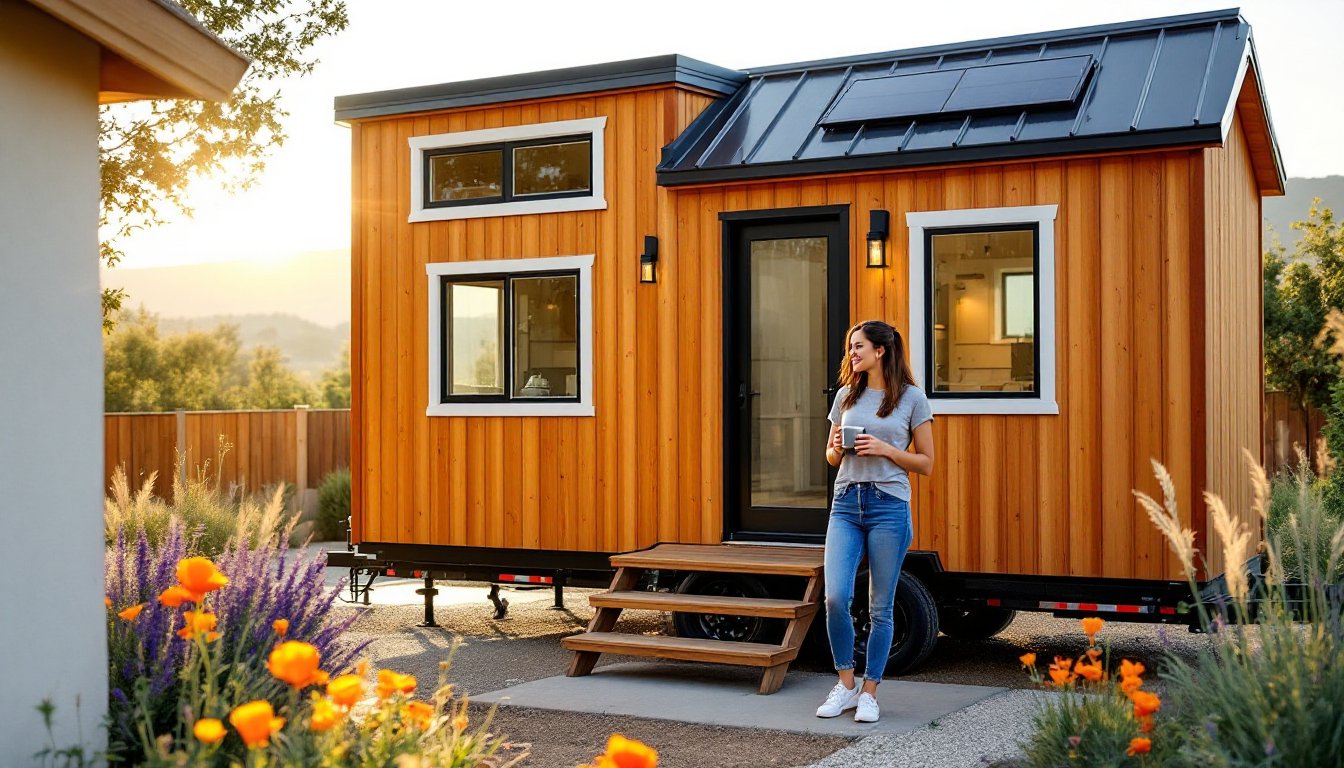
Table of Contents
ToggleCalifornia’s housing crisis has pushed average home prices past $800,000, leaving many residents priced out of traditional homeownership. Enter the tiny home movement, a practical response to sky-high costs and a growing desire for minimalist living. From converted ADUs in San Diego backyards to custom-built units tucked into Sonoma County valleys, tiny homes (typically under 400 square feet) offer a foothold in the state’s brutal real estate market. But going small in California isn’t as simple as parking a trailer and calling it home. Zoning laws, building codes, and utility hookups vary wildly across 58 counties. This guide walks you through the legal landscape, cost breakdowns, financing strategies, and design considerations you’ll need to make tiny living work in the Golden State.
Key Takeaways
- Tiny homes in California offer an affordable entry point to homeownership, with costs ranging from $20,000 for DIY builds to $150,000+ for pre-built units, compared to median home prices exceeding $800,000.
- Accessory Dwelling Units (ADUs) provide the clearest legal path for tiny home California residents, with ministerial approval required since 2020 reforms, while tiny homes on wheels face stricter zoning restrictions and RV classification challenges.
- Foundation-based ADUs and permanent structures cost $100–$400+ per square foot all-in, while pre-built tiny homes on wheels range $50,000–$150,000, with hidden costs for permits, utilities, and site prep adding $10,000–$40,000.
- Financing options include personal loans (6–15% rates), RV loans for RVIA-certified tiny homes on wheels (4–9% rates), home equity loans, and construction-to-permanent loans, since traditional mortgages rarely apply.
- Fresno County, Nevada County, and San Luis Obispo County offer the most permissive zoning and lower land costs for tiny home California projects, while coastal cities like Malibu and Carmel impose restrictive regulations and high permit fees.
- Successful tiny living requires maximizing vertical space with loft beds and floating shelves, investing in multi-function furniture, addressing climate-specific needs (coastal moisture control or desert insulation), and testing the lifestyle through a short-term rental before committing to full-time living.
Why California Is Embracing the Tiny Home Movement
California’s housing affordability crisis is the primary driver behind tiny home adoption. With median home prices in metros like San Francisco and Los Angeles exceeding $1 million, many buyers, especially first-timers and retirees, are seeking alternatives that don’t involve a crushing mortgage or a two-hour commute.
Tiny homes also align with California’s environmental priorities. Smaller footprints mean reduced energy consumption, lower carbon emissions, and less material waste. Many tiny homeowners install solar panels (California’s abundant sunshine makes payback periods favorable), composting toilets, and rainwater catchment systems. The state’s Title 24 energy efficiency standards apply to most permanent tiny structures, pushing builders toward LED lighting, high-R insulation, and efficient HVAC systems.
Beyond economics and sustainability, cultural shifts matter. Millennials and Gen Z Californians increasingly value experiences over possessions, and tiny homes fit that ethos. Downsizing forces ruthless decluttering, only essentials make the cut. The tiny home aesthetic has gained traction on social media, showcasing clever storage hacks, fold-down furniture, and multi-use spaces that maximize every square inch.
Finally, the COVID-19 pandemic normalized remote work, freeing professionals from expensive urban cores. A tiny home in a rural county with fiber internet suddenly became viable. Pair that with California’s vast geographic diversity, beaches, mountains, deserts, and you’ve got a recipe for location-independent living on a budget.
Understanding California’s Tiny Home Laws and Zoning Regulations
California doesn’t have a unified “tiny home law.” Instead, regulations cascade from state building codes (based on the International Residential Code, or IRC) down to county and city ordinances. This means a tiny home legal in one jurisdiction might be prohibited twenty miles away.
Accessory Dwelling Units (ADUs) are the clearest legal path. Since the 2020 ADU reform laws, cities and counties must approve most ADU applications ministerially, no discretionary review. If your tiny home sits on a permanent foundation, connects to utilities, and meets IRC standards (including minimum room sizes, ceiling heights of 7 feet in habitable spaces, and egress windows), it can qualify as an ADU. This works for backyard units, converted garages, or detached structures on an existing residential lot.
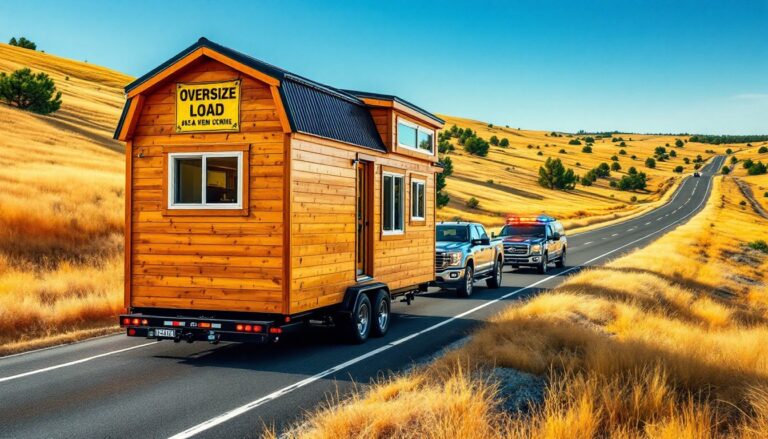
Tiny homes on wheels (THOWs) face tougher scrutiny. Many jurisdictions classify them as RVs, which are prohibited for permanent residential use in most residential zones. California Vehicle Code and local ordinances often restrict RV occupancy to 30 consecutive days. Some cities have carved out exceptions, like Fresno’s tiny home village ordinance, but these are rare.
Building permits are almost always required for permanent structures. Expect inspections for foundation, framing, electrical (must comply with NEC), plumbing, and insulation. Even a THOW parked long-term may trigger permit requirements if it’s deemed a dwelling unit. Skipping permits can result in fines, forced removal, or difficulty selling the property later.
Health and safety codes matter too. Minimum habitable room sizes (IRC typically requires 70 square feet for a bedroom), ventilation rates, smoke/CO detectors, and emergency egress windows aren’t optional. Some counties waive or modify standards for ADUs under 750 square feet, but confirm locally.
Where You Can Legally Place a Tiny Home in California
On your own property as an ADU: This is the most straightforward option. If you own a single-family lot, you can usually add one ADU and one junior ADU (JADU, under 500 square feet, carved from existing space). The ADU can be detached, attached, or a garage conversion. Check setback requirements, often 4 feet from side and rear property lines for detached ADUs.
On someone else’s property (with permission): You can place an ADU on a family member’s or friend’s lot, provided local zoning allows it and the property owner pulls permits. Some families use this for multigenerational living, an elderly parent or adult child in a backyard unit.
In designated tiny home communities: A handful of California communities, like Opportunity Village Eugene (though that’s Oregon: California examples include Dignity Village-style pilot projects in Los Angeles and Sacramento), allow clustered tiny homes. These are rare and often target transitional housing or low-income residents. Private RV parks sometimes permit THOWs, but verify long-term residency rules.
Rural and unincorporated areas: County regulations in places like Humboldt, Mendocino, or Nevada County may be more permissive, especially on larger parcels (5+ acres). But, septic, well, and fire safety requirements still apply. Don’t assume “remote equals unregulated”, code enforcement exists even in the boonies.
Not in most residential driveways or streets: Parking a THOW in your driveway and living in it full-time will likely violate local zoning, even if it’s “your” property. Codes distinguish between parking an RV temporarily and using it as a primary residence.
How Much Does a Tiny Home Cost in California?
Costs vary wildly based on size, complexity, and whether you DIY or hire out.
Pre-built tiny homes on wheels: Expect $50,000 to $150,000 for a turnkey THOW from builders like Tumbleweed, Tiny Heirloom, or California Tiny House. Entry-level models (around 200 sq ft) start near $50k: luxury builds with high-end appliances, custom cabinetry, and off-grid systems push $150k+. These prices usually include delivery within California but not land, utilities, or permits.
DIY THOW builds: Doing it yourself can drop costs to $20,000 to $50,000, depending on finishes. A basic shell (trailer, framing, sheathing, roofing) runs $8k–$12k in materials. Add electrical ($2k–$4k), plumbing ($1.5k–$3k), insulation ($1k–$2k), windows/doors ($2k–$4k), and interior finishes (wide range). Salvaged materials and sweat equity help, but expect 500+ hours of labor. Tool rental or purchase (miter saw, nail gun, reciprocating saw) adds another $500–$1,500 if you don’t already own them.
Foundation-based ADUs: Building a permanent tiny home or ADU in California costs $100 to $400+ per square foot, all-in. For a 400 sq ft unit, that’s $40,000 to $160,000+. Foundation work (slab, pier-and-beam, or crawl space) runs $5k–$15k. Framing, roofing, siding, and exterior work: $15k–$40k. Rough-in electrical and plumbing: $8k–$15k. Insulation, drywall, flooring, fixtures: $20k–$50k. Kitchen and bath (even compact ones) eat budget fast, plan $8k–$20k combined. Prefab ADU kits (like Mighty Buildings or Abodu) offer faster timelines at $150–$250/sq ft, including delivery and basic finishes.
Hidden costs to budget for:
- Permits and fees: $2,000–$10,000+ depending on jurisdiction. Impact fees, plan check, and utility connection charges vary.
- Site prep: Grading, trenching for utilities, and driveway/pathway access: $3k–$10k.
- Utility hookups: Water, sewer, electric service: $5k–$20k if extending lines. Off-grid systems (solar + battery, composting toilet, well/rainwater) can cost $10k–$30k.
- Appliances and furnishings: Compact, multi-use furniture isn’t cheap. Budget $5k–$15k.
- Land: If you don’t own property, rural parcels in California start around $50k but can easily exceed $200k near desirable areas.
Prices in California run 20–40% higher than national averages due to labor costs, material transport, and stricter code requirements. A project feasible for $30k in Texas might cost $45k here.
Financing Your California Tiny Home: Loans and Budget Tips
Traditional mortgages don’t typically cover tiny homes, especially THOWs, because most lenders require a minimum loan amount (often $50k–$75k) and permanent foundation. But options exist.
Personal loans: Unsecured personal loans from banks or credit unions cover $10k–$50k with terms of 3–7 years. Interest rates run 6–15% depending on credit score. Good for DIY builds or THOW purchases. No collateral required, but higher rates than mortgages.
RV loans: If your THOW is RVIA-certified (Recreational Vehicle Industry Association), you may qualify for an RV loan. Rates are 4–9%, terms up to 15 years, and loan amounts reach $100k+. Lenders like LightStream or Alliant Credit Union offer these. Certification requires third-party inspection to ANSI A119.5 standards (for park model RVs) or ANSI A119.2 (for towable RVs).
Home equity loans or HELOCs: If you own property with equity, borrow against it to fund an ADU or tiny home. Rates are typically lower (currently 7–10%), and interest may be tax-deductible if the loan improves the property. Risk: your home is collateral.
Construction loans: For foundation-based ADUs, a construction-to-permanent loan finances building, then converts to a mortgage. Requires detailed plans, contractor bids, and inspections at each phase. Expect 20% down and rates 1–2 points above standard mortgages.
Manufacturer financing: Some tiny home builders (like Tumbleweed) partner with lenders to offer financing packages. Convenient but often higher rates, compare carefully.
Budget tips:
- Buy used: Pre-owned THOWs sell for 30–50% less than new. Inspect thoroughly for water damage, structural issues, and code compliance.
- Phase the build: If DIYing, buy materials in stages to spread costs. Complete shell and weatherproofing first, then interiors over months.
- Source salvage: Habitat for Humanity ReStores, Craigslist, and architectural salvage yards offer windows, doors, cabinetry, and fixtures at steep discounts. Inspect for damage and code compliance.
- Prioritize off-grid where feasible: In remote areas, solar + composting toilet + rainwater costs less than extending utilities a mile.
- DIY what you can, hire what you can’t: Electrical and plumbing often require permits and inspections. Hiring licensed pros for rough-in (then finishing yourself) balances cost and compliance.
Best Places to Buy or Build a Tiny Home in California
Builders and retailers:
- California Tiny House (Fresno): Custom THOWs and ADUs, strong reputation for code-compliant builds. Expect $60k–$120k.
- Tiny Mountain Houses (SoCal): Specializes in off-grid, mountain-ready designs. Solar packages included.
- Mighty Buildings (Oakland): 3D-printed prefab ADUs, delivered and set in days. $150–$250/sq ft.
- Abodu (Redwood City): Standardized ADU kits, permit support included. Popular in Bay Area.
- Used marketplaces: Tiny House Listings, Tiny Home Builders, and Facebook Marketplace feature pre-owned units. Always inspect in person.
Best counties/cities for tiny living:
- Fresno County: Progressive tiny home ordinances, lower land costs. Good for THOWs in designated zones.
- Nevada County: Rural, permissive zoning on larger parcels. Popular with off-gridders.
- San Luis Obispo County: Scenic, moderate climate. ADU-friendly cities like SLO and Paso Robles.
- Humboldt County: Cheapest land in California, relaxed enforcement in unincorporated areas. Wet climate requires robust moisture barriers.
- Los Angeles (city): ADU reform has exploded backyard builds. High costs but huge demand, rent it out when you’re done.
Avoid hyper-restrictive coastal cities (Malibu, Carmel) unless you’re building a code-perfect, high-end ADU. Permitting can take a year and cost $20k+ in fees.
Essential Design and Living Tips for California Tiny Homes
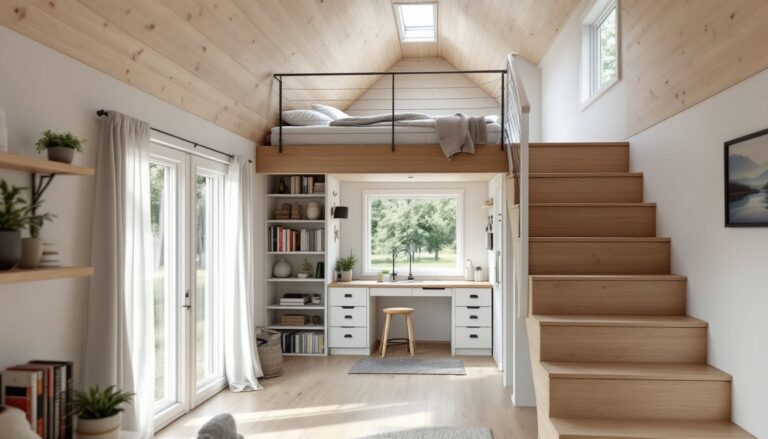
Maximize vertical space: Loft beds free up floor area. Install cleats on walls (2×4 studs at 16″ on center can support shelving) for floating shelves, fold-down desks, or Murphy beds. Ceiling-mounted pot racks and bike hoooks use dead air.
Multi-function furniture is non-negotiable: Sofa-beds, drop-leaf tables, storage ottomans. Custom-built pieces (benches with lift-top storage, staircase drawers leading to lofts) make better use of odd dimensions than off-the-shelf stuff.
Lighting and color expand perceived space: LED strip lighting under cabinets and lofts adds ambiance without eating square footage. Light-colored walls (whites, soft grays) reflect California sun and make interiors feel larger. Avoid dark, heavy colors unless you want a cave vibe.
Climate considerations: Coastal areas need moisture control, vapor barriers, dehumidifiers, and mold-resistant materials (cement board, metal roofing). Inland deserts require heavy insulation (spray foam or rigid foam board, R-13 to R-21 in walls, R-30+ in roofs) and reflective roofing to manage 100°F+ summers. Earthquake safety: anchor cabinets and appliances, especially in THOWs where movement during towing can mimic seismic forces.
Kitchens and baths: Compact appliances (18″ dishwashers, apartment-size fridges, two-burner cooktops) are staples. RV-style cassette toilets or composting units (Nature’s Head, Sun-Mar) work in off-grid setups. Tankless water heaters (electric or propane) save space and provide endless hot water. Wet baths (shower/toilet combo) common in tiny home designs save 10–15 sq ft but feel cramped, tradeoff to consider.
Storage hacks: Magnetic knife strips, hanging baskets, under-stair cubbies, toe-kick drawers under cabinets. Every nook counts. Vacuum-seal off-season clothes. Digitize documents and photos.
Outdoor living extends your footprint: Deck, patio, or porch effectively adds square footage in California’s mild climate. Fire pits, outdoor kitchens, and shade structures (pergolas, awnings) make outdoor spaces livable year-round in most regions.
Permitting and resale: Even if you build a THOW, document everything. Photos, receipts, code compliance reports. If you ever sell or move it, buyers (and lenders) want proof it’s legit. For ADUs, permitted construction adds property value and avoids headaches during home sales.
Lifestyle reality check: Tiny living isn’t for everyone. Two people in 200 sq ft requires serious compatibility and organization. No room for clutter or impulse buys. Test it first, rent a tiny home on Airbnb for a week in your target climate. If you’re climbing the walls by day three, reconsider. If you love it, you’re ready.
California’s tiny home trend continues to grow, driven by necessity, values, and changing definitions of “home.” Done right, a tiny home offers financial freedom, environmental responsibility, and a simplified life. Done wrong, it’s an expensive mistake parked illegally in your driveway. Do your assignments, respect the codes, and plan for the long haul.