Table of Contents
ToggleTiny homes aren’t just a trend, they’re a practical solution to housing costs, sustainability goals, and lifestyle simplification. But before anyone swings a hammer or orders lumber, they need a solid floor plan. Without one, even the most enthusiastic builder risks misaligned walls, wasted materials, and code violations. The good news? Quality tiny home floor plans don’t require expensive architects or design software subscriptions. Dozens of free resources offer downloadable, customizable blueprints that meet building codes and maximize every square foot. This guide walks through where to find them, how to evaluate quality, and what to customize before breaking ground.
Key Takeaways
- Tiny home floor plans free of charge are available through government programs, community colleges, and online platforms like Ana White’s woodworking site, providing code-compliant blueprints without expensive architect fees.
- A complete floor plan package must include foundation details, exterior elevations, electrical layouts, and cross-section specifications to ensure structural integrity and permit approval before construction begins.
- Free tiny home floor plans should be evaluated for wall construction specs (2×4 vs. 2×6 framing), roof framing details, and whether they accommodate trailer-mounted builds or permanent foundations, as these significantly impact material selection and weight limits.
- Code compliance is non-negotiable: plans must reference local building codes (IRC Appendix Q for foundation builds, Appendix U for RV-certified homes) and address safety features like loft railings and emergency egress windows before submission to permit offices.
- Customization of free plans is possible for windows, doors, kitchens, and bathrooms, but structural modifications involving walls, lofts, or roof framing should be reviewed by a structural engineer ($300–$800) to prevent costly construction errors.
- Pairing a quality free floor plan with thoughtful customization, local code verification, and honest assessment of builder skill level transforms tiny home designs from inspiration into actionable, livable blueprints.
Why Tiny Home Floor Plans Are Essential Before You Build
A floor plan isn’t just a sketch, it’s the blueprint that determines structural integrity, material quantities, and permit approval. Jumping into construction without one is like framing a wall without measuring the studs.
Code compliance is the first reason. Most jurisdictions require submitted plans that show wall placements, egress windows, loft ladder angles, and electrical layouts. The International Residential Code (IRC) Appendix Q covers tiny homes on foundations, while the IRC Appendix U addresses RV-certified tiny houses on wheels. Without a plan that references these standards, permit offices won’t approve the build.
Material estimation depends on accurate plans. A detailed floor plan specifies joist spacing (typically 16″ or 24″ on center), roof pitch, window rough openings, and wall heights. These measurements drive lumber orders, sheathing calculations, and even insulation quantities. Guessing leads to multiple hardware store runs or wasted materials sitting in the driveway.
Layout efficiency matters intensely in spaces under 400 square feet. A good plan accounts for door swing clearances, appliance dimensions, and vertical storage opportunities. It answers questions like: Can the refrigerator door open fully? Does the sleeping loft ladder block the bathroom entrance? Will a standard 36″ range fit, or does the design require a 24″ apartment-size model?
Safety features must be engineered upfront. Loft sleeping areas need railings that meet minimum height requirements (typically 36″ guards). Stairs or ladders must comply with riser/tread dimensions. Emergency egress windows require specific minimum opening sizes, usually 5.7 square feet of clear opening with a minimum height of 24″ and width of 20″. These aren’t suggestions: they’re life-safety requirements that belong in the initial plan, not added as afterthoughts.
Finally, a floor plan serves as the communication tool between builders, inspectors, and anyone helping with the project. It eliminates the “I thought you meant…” conversations that derail timelines and budgets.
Where to Find Free Tiny Home Floor Plans Online
Government and Educational Resources
University extension programs and government housing initiatives occasionally publish free tiny home designs as part of affordable housing research. These plans tend to emphasize code compliance and structural soundness over aesthetic flair, making them solid starting points.
The USDA Rural Development program has partnered with architecture schools to create open-source small home designs, though availability varies by state. Check regional extension offices for downloadable PDFs that include material lists and foundation details.
Some community colleges with construction trades programs post student-designed tiny home plans as portfolio pieces. These often include detailed framing diagrams, electrical schematics, and even cost breakdowns based on regional lumber pricing. They’re designed to meet local code, which saves modification time.
State energy offices sometimes offer free plans for high-efficiency small homes as part of green building initiatives. These typically feature advanced framing techniques, tight building envelopes, and specs for insulation values that exceed minimum code, valuable if heating and cooling costs are a priority.
Community-Driven Platforms and Forums
DIY communities have generated hundreds of free tiny home plans, though quality and code compliance vary widely. Experienced builders often share their tested designs, while some DIY bloggers with woodworking expertise offer free plans with detailed cut lists and assembly instructions.
Websites like Apartment Therapy occasionally feature small space floor plans with downloadable layouts, though these lean more toward design inspiration than construction-ready blueprints. They’re useful for spatial planning and furniture placement but typically need professional detailing before submission to permit offices.
Reddit’s r/TinyHouses and TinyHouseTalk.com forums maintain user-contributed plan libraries. Members upload SketchUp files, hand-drawn sketches, and even full construction sets. The catch? No vetting process exists, so plans require careful review for structural soundness. Look for designs that specify lumber grades (No. 2 or better for framing), fastener schedules, and load calculations for lofts.
Pinterest aggregates thousands of tiny home plans, but it’s a mixed bag. Many “free plans” links lead to paid services or incomplete sketches. The platform works better as a visual idea board than a source for construction-ready documents. When a promising design appears, trace it back to the original source, often a blog or designer’s website where the full plan resides.
One standout source is Ana White’s woodworking site, which offers the Quartz Tiny House plans as a completely free download. The set includes framing details, material cut lists, and step-by-step instructions written for DIY builders. The design uses standard dimensional lumber and straightforward construction techniques accessible to intermediate builders.
YouTube builders like Living Big in a Tiny House and Tiny Nest occasionally link to free plans in video descriptions, particularly for designs they’ve featured on their channels. These often come with video walkthroughs showing construction details that static plans can’t convey, helpful for understanding complex roof framing or custom storage solutions.
How to Evaluate and Customize Free Tiny Home Plans
Not all free plans are created equal. Before committing to one, check whether it’s a loose concept sketch or a permit-ready construction set. A complete plan package should include a foundation plan, floor plan, four exterior elevations, electrical layout, and cross-section details showing wall assembly and insulation.
Wall construction specs matter more than most beginners realize. Plans should specify whether walls are 2×4 or 2×6 framing, stud spacing, sheathing type (typically 7/16″ or 1/2″ OSB), and moisture barrier details. Tiny homes on wheels need different wall assembly than homes on permanent foundations, trailer-mounted homes can’t use heavy materials like cement board siding without exceeding road weight limits.
Roof framing deserves close scrutiny. Plans must show rafter spacing, ridge beam size, and how the roof attaches to the walls. Tiny homes often use cathedral ceilings to maximize interior volume, which means rafters carry both roof load and ceiling finish. Undersized rafters lead to sagging rooflines and potential leaks. Look for lumber callouts (2×6 rafters at 16″ on center is common for small spans) and connection details.
Electrical and plumbing layouts separate amateur sketches from real plans. Even if the builder hires these trades out, the floor plan should indicate fixture locations, panel placement, and whether the design assumes 120V or 240V service. Tiny homes under 400 square feet might get by on 100-amp service, but homes with electric heat or large appliances need more capacity.
Customization typically starts with window and door placement. Free plans rarely match everyone’s site orientation or view priorities. Moving a window requires adjusting the rough opening in the framing plan and confirming the new location doesn’t compromise structural headers. Load-bearing walls can’t have openings added without engineering calculations.
Kitchen and bathroom layouts offer the most flexibility. Swapping an L-shaped kitchen for a galley configuration doesn’t affect structural elements, though it changes plumbing runs and cabinet dimensions. Bathroom modifications might require moving drain lines, feasible in homes on foundations, trickier in trailer-mounted builds where plumbing often runs through a central chase.
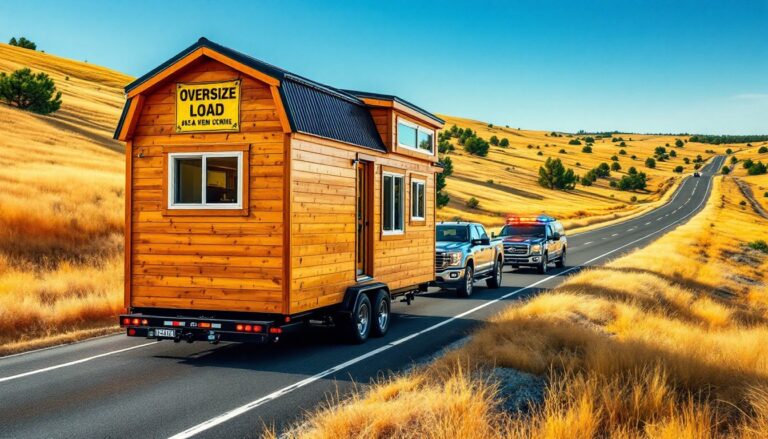
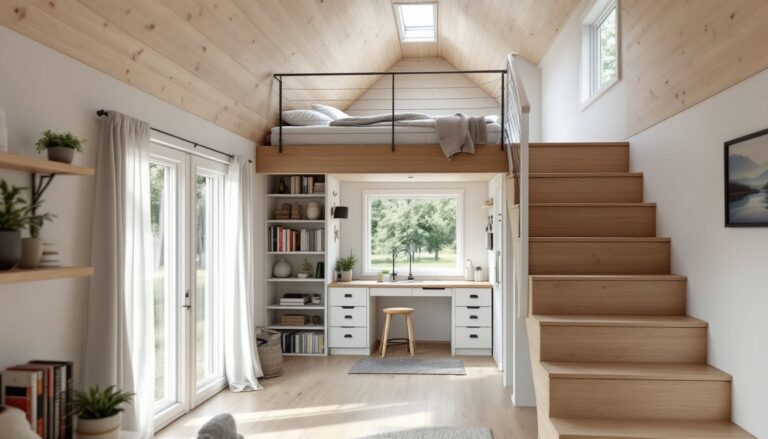
Loft modifications need caution. Raising or lowering loft height affects headroom, ladder pitch, and sometimes overall building height (critical for homes on trailers that must clear highway overpasses). Expanding loft square footage adds weight, which impacts floor joist sizing below. Any loft change should trigger a review of the floor framing plan.
Storage customization rarely causes structural issues. Adding cubbies, converting dead space under stairs, or installing overhead cabinets improves functionality without modifying load-bearing elements. Just ensure additions don’t block required egress paths or ventilation.
Before finalizing modifications, cross-check local codes. Some jurisdictions impose minimum room sizes (sleeping areas often need 70 square feet minimum), ceiling height requirements (habitable rooms typically need 7′ ceilings, though lofts may go lower), and specific stair or ladder requirements. What’s legal in Portland might not pass inspection in Texas.
Consider having modified plans reviewed by a structural engineer if changes involve removing walls, resizing openings, or altering roof or floor framing. The cost, typically $300–$800 for a tiny home review, prevents expensive mid-construction surprises and speeds permit approval. Many jurisdictions require a PE stamp on plans anyway, particularly for homes on permanent foundations.
Conclusion
Free tiny home floor plans provide the foundation for successful small-space builds, but they’re starting points, not final blueprints. The best approach pairs a solid free plan with thoughtful customization, code verification, and honest assessment of builder skill level. Some projects need professional help, and recognizing that upfront saves money compared to fixing mistakes later. With the right plan and realistic expectations, a tiny home moves from Pinterest dream to livable reality.